
Last updated September 20, 2026
Free on-site gate assessment - hinges, posts, and your LiftMaster or Nice gate operator checked before anything is quoted
The assessment is free and the quote is the invoice.

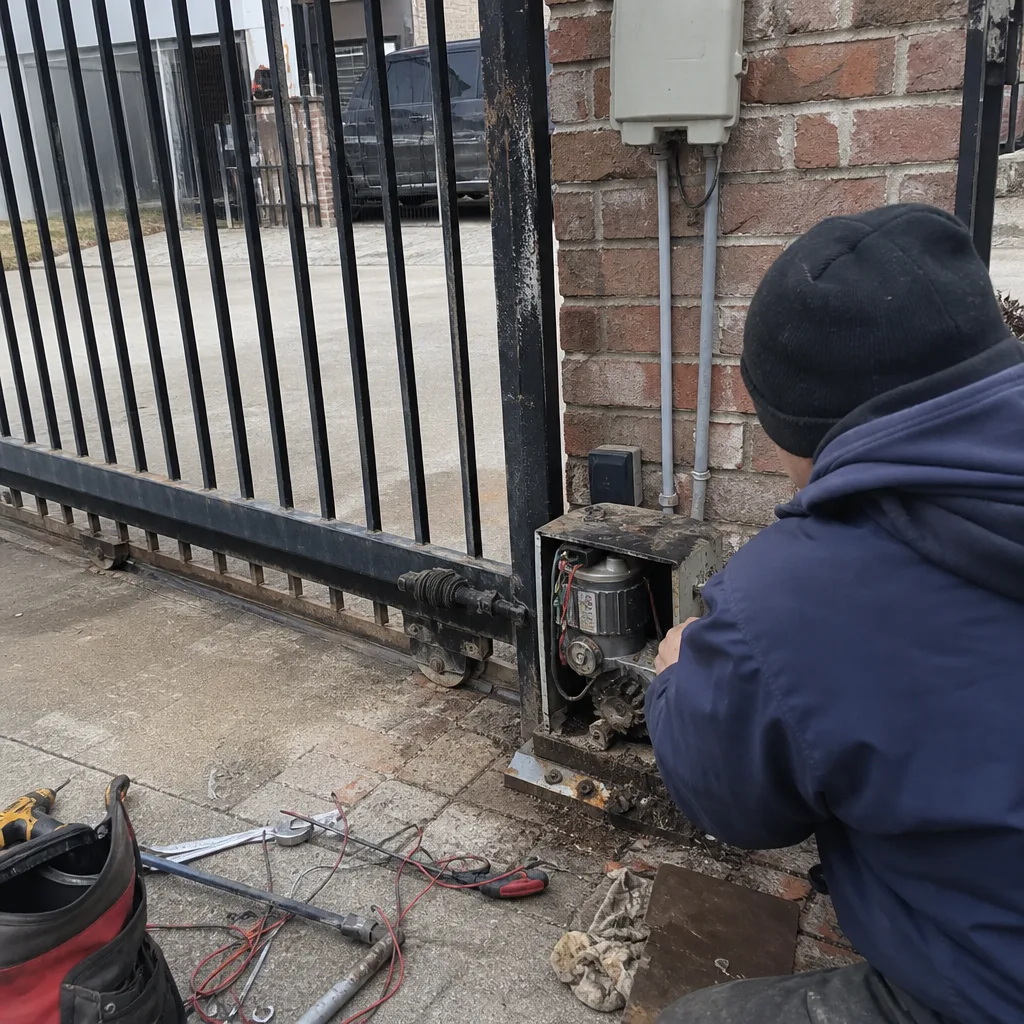 Before
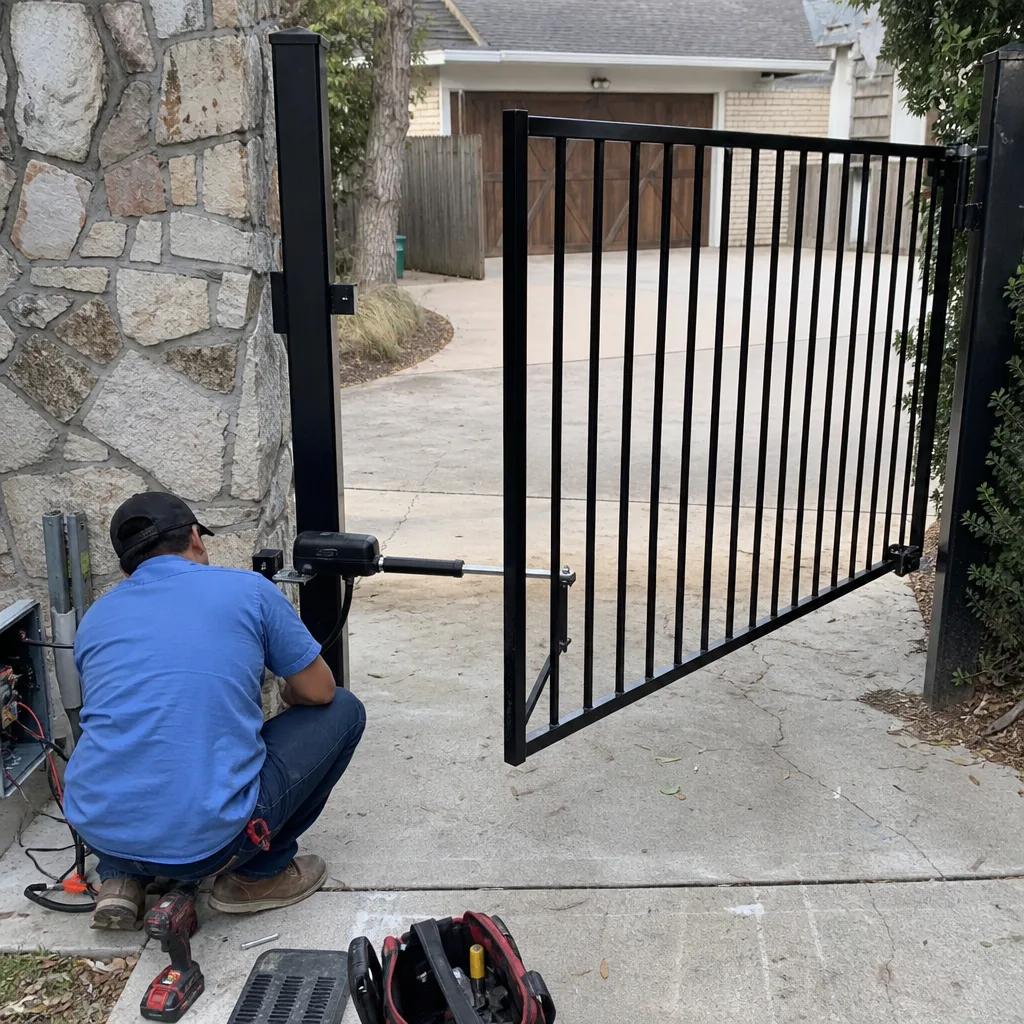 After
After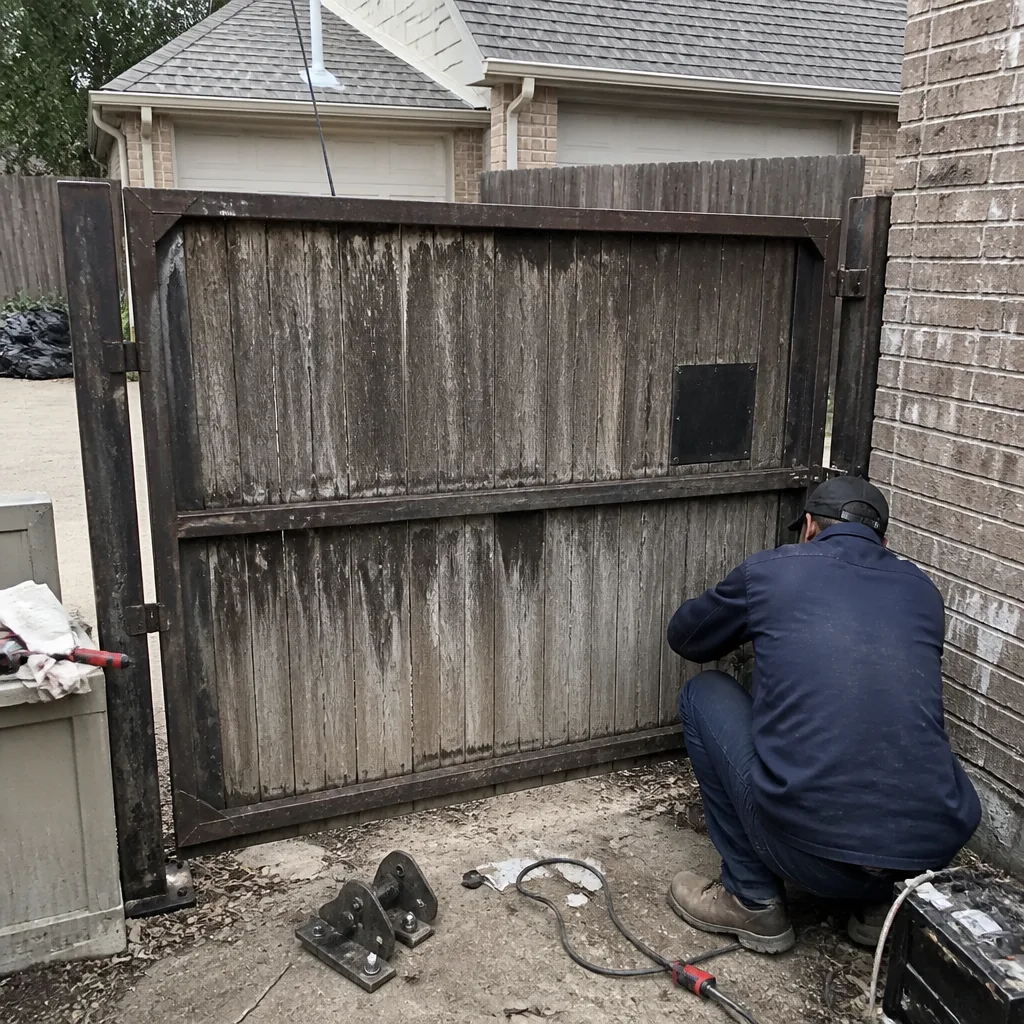 Before
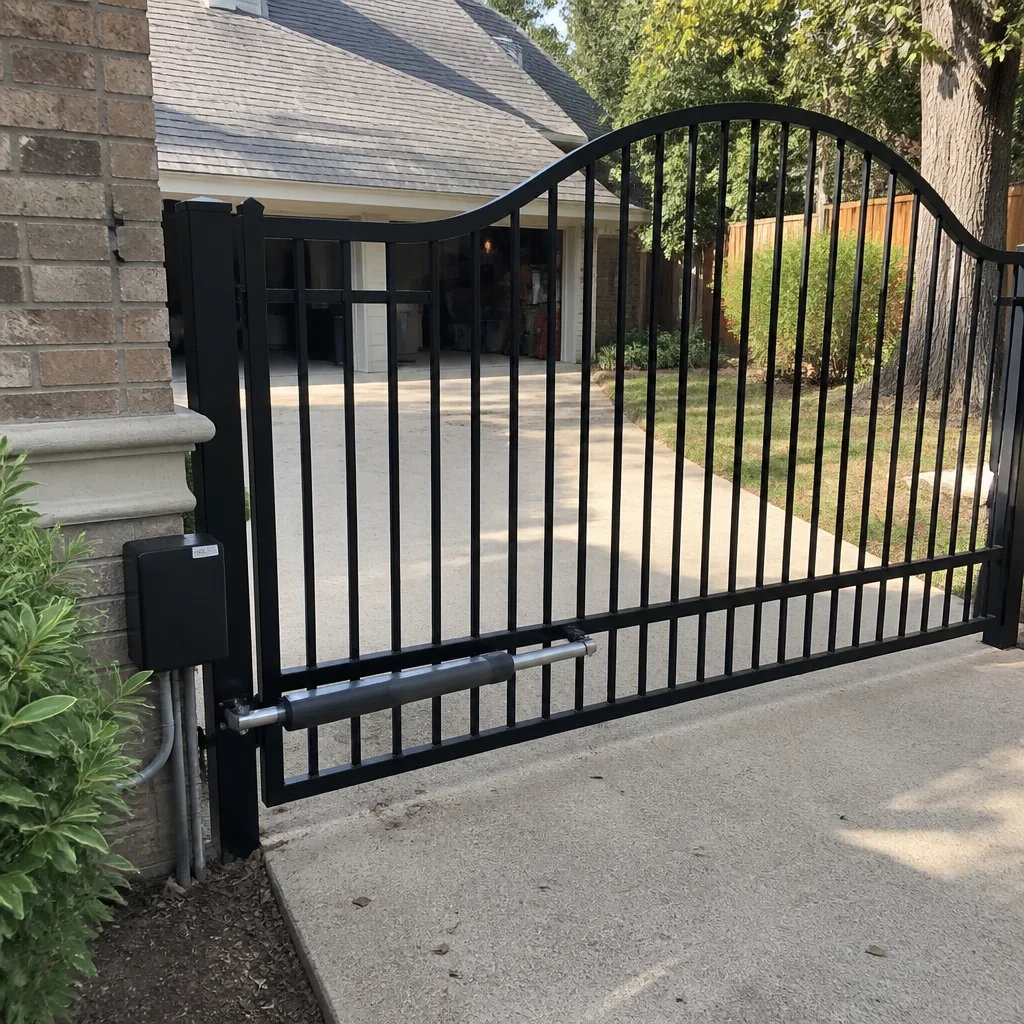 After
After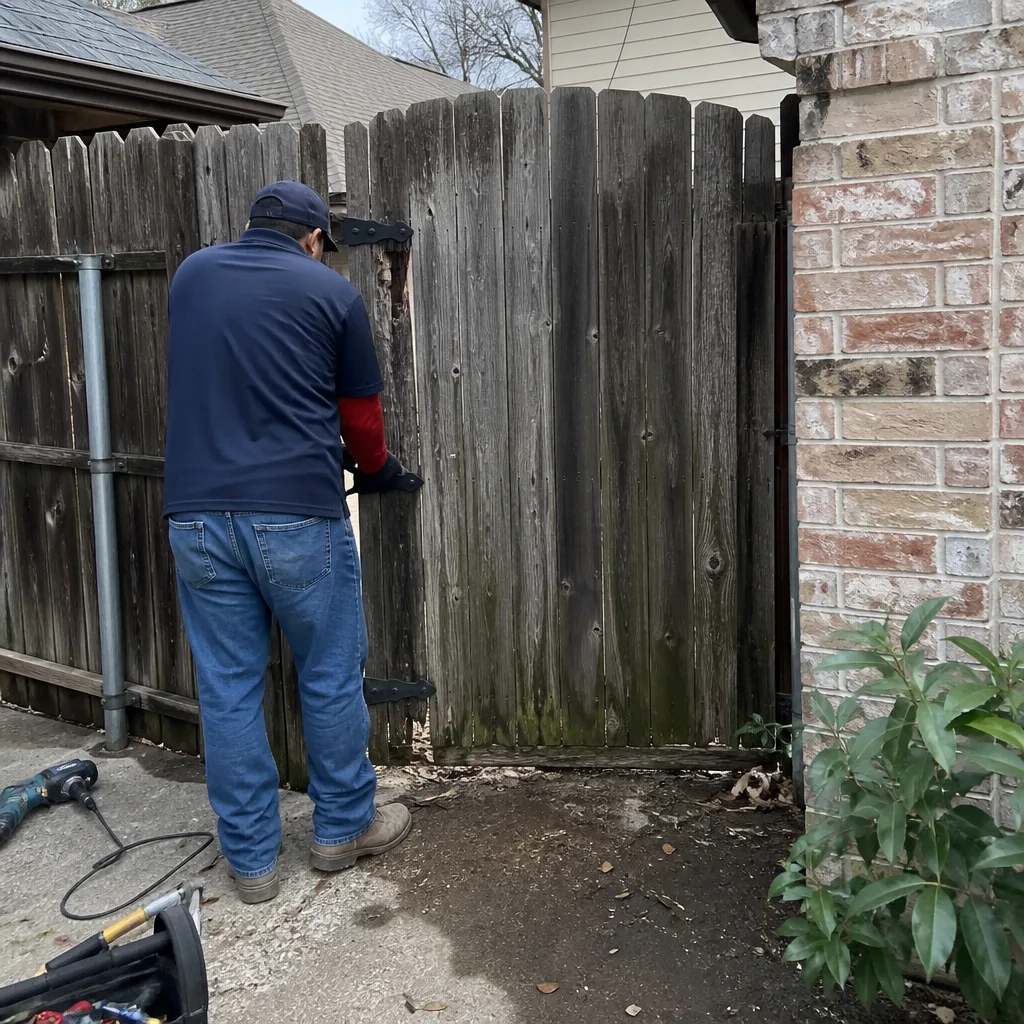 Before
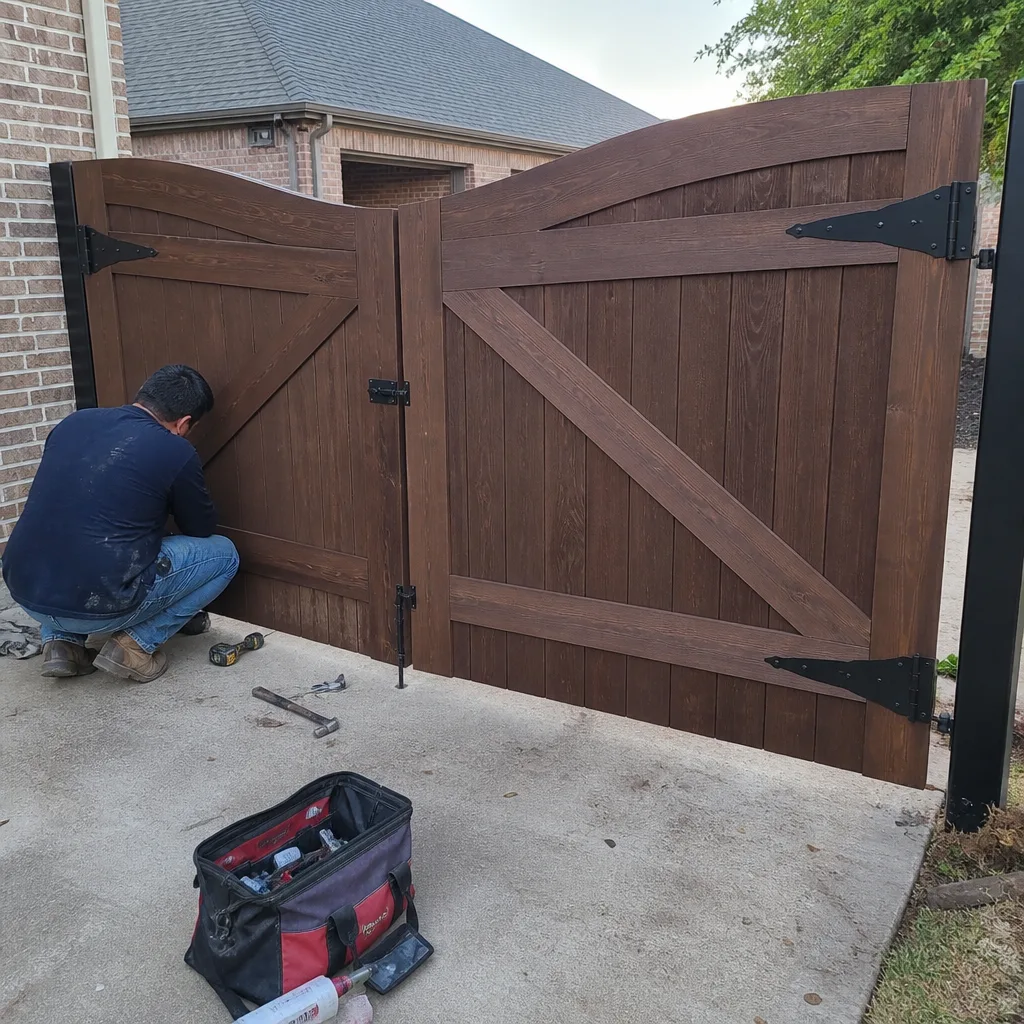 After
AfterSeasonal Gate Repair Care for Carrollton: Year-Round Homeowner’s Guide
The February 2021 freeze didn’t just burst pipes across Carrollton. It seized gate operators, cracked gear housings, and shorted control boards in hundreds of driveways, and the repair bills that followed split cleanly into two groups. Homeowners who found the damage during a November walkthrough paid standard rates and had parts ordered before the cold hit. Homeowners who discovered it in February paid emergency dispatch fees and waited weeks for parts. This guide-along with our Complete Guide to Gate Repair in Carrollton-assigns specific inspection tasks to specific months based on what Carrollton’s climate actually does to gate hardware, so you’re never in the second group.
Quick Answer
Seasonal gate care in Carrollton means two critical windows: a pre-summer electronics and lubrication check in April, and a freeze-prep inspection in November. Between those, you need post-storm walkthroughs after severe weather and monthly visual checks on post alignment and sensor function. A disciplined seasonal routine typically costs a homeowner under $150 a year in materials and prevents most four-figure emergency repairs.
Table of Contents
- April: The Pre-Summer Electronics Check
- November: Freeze Preparation Before the First Hard Freeze
- What 100°F Heat Does to Your Gate Operator
- Clay Soil Movement and Post Alignment: What to Measure
- Post-Storm Inspection Protocol for Carrollton
- Building a Seasonal Log That Any Technician Can Read
- The 15-Minute Monthly Walkthrough
- Common Mistakes to Avoid
- When to Call a Professional
- Frequently Asked Questions
BeforeAfterApril: The Pre-Summer Electronics Check
By mid-April in Carrollton, daytime highs are already brushing the mid-80s, and the real heat arrives fast. If your gate operator has a heat-related failure waiting to happen, it usually declares itself in May or June when the control board sits in a steel housing that’s been baking in direct sun for hours. The April check is about catching those failures before the housing becomes an oven. What we look for on a pre-summer visit: capacitor swelling on the control board, discoloration around relays, and any deformation in the plastic housing of the operator arm. Those are the measurable signs that heat stress is accumulating, and they’re visible before the board actually dies.
Step-by-step April inspection:
- Kill power to the operator at the breaker or disconnect. Never open a control board housing with live power.
- Remove the housing cover and photograph the board before touching anything. That baseline photo matters later.
- Look for swollen or split capacitors, burn marks around relays, and any wire insulation that looks dried or cracked.
- Check the battery backup unit if you have one. Battery chemistry degrades faster above 95°F ambient, and a battery that tested fine in March can fail its load test in July.
- Clean debris from the housing interior with compressed air, not a brush. Brushes carry static.
- Lubricate hinge points, the chain or belt path, and the operator arm pivot with a white lithium grease. Avoid WD-40 on gate hardware: it displaces water but strips the heavier lubricant that load-bearing joints actually need.
- Reconnect power, cycle the gate three times, and photograph the limit-switch positions after travel.
In our experience with Carrollton homes, April is also the right month to reseal the housing gasket. The rubber gasket between the control board housing and its cover hardens and shrinks over a North Texas summer, and by August, dust and humidity are getting past it. A tube of UV-resistant silicone sealant costs about $12 and takes ten minutes to apply. It prevents most of the August board failures we get called out for.
November: Freeze Preparation Before the First Hard Freeze
Carrollton’s first hard freeze typically arrives in late November or early December, which means your freeze-prep window opens around the first week of November. The goal is not to make your gate winter-proof in some Minnesota sense. It’s to keep moisture out of unsealed conduit, lubricate pivot points with a grease that won’t stiffen below 32°F, and confirm that the operator’s force sensitivity is set correctly before cold metal makes everything bind harder. A gate that barely opens at 50°F will refuse to open at 25°F.
November freeze-prep checklist:
- Inspect all exposed conduit joints and fittings for cracks, gaps, or separations. Freeze damage in North Texas almost always starts with water getting into conduit during a November rain, then expanding when the temperature drops. Unsealed conduit is the single most common freeze-related failure we document.
- Wrap any conduit joint that shows a gap with UV-resistant conduit tape. This is not a permanent repair, but it keeps a hard freeze from turning a small gap into a split pipe.
- Lubricate hinge pins, roller bearings, and the operator arm with a silicone or lithium grease rated for cold temperatures. Grease that thickens below freezing adds load to the motor, and that added load is what causes boards to trip their thermal cutoff.
- Check the photo-eye alignment at both the gate’s closed and open travel limits. Cold temperatures shrink metal, and a photo-eye that was aligned in August can drift out of the beam in December.
- Run a force test: place a gloved hand or a scrap 2×4 against the gate’s leading edge as it closes. It should reverse immediately with light pressure. If it doesn’t, the force sensitivity is set too high, and the cold will only make that worse.
- Photograph the entire gate assembly, the operator, the conduit runs, and the post bases. This is your pre-freeze baseline.
Most Carrollton gates are steel or wrought iron with powder-coat finish. That finish is the only thing standing between the metal and corrosion. November is the right month to touch up any chips or scratches with matched paint, because that exposed metal will flash-rust in a wet December and start peeling the surrounding finish by spring. A $15 touch-up kit prevents a $600 repaint later.
What 100°F Heat Does to Your Gate Operator
Carrollton sees dozens of days above 95°F every summer, and the inside of a gate operator housing runs 20 to 30 degrees hotter than ambient. A steel box sitting in direct July sun on a black driveway can reach 130°F internally. Control boards are engineered to tolerate heat, but they don’t like it, and the failure pattern is predictable. First, capacitors degrade. Then relay contacts start to pit. Then the board throws intermittent faults: the gate won’t open, then it works fine an hour later, then it fails again. Homeowners describe it as a ghost problem. It’s heat stress, and it’s accumulating.
The components most affected by Carrollton’s summer heat:
- Control board capacitors: In a housing at 120°F, electrolytic capacitors lose lifespan roughly twice as fast as they would at 80°F. Swelling at the top of the capacitor is the visible sign, and it means replacement is imminent, not eventual.
- Battery backup units: Most residential gate battery backups use sealed lead-acid batteries rated for a maximum ambient of 104°F. A housing at 115°F shortens their useful life from 3-5 years to 18-24 months. If your battery tested fine two years ago and now won’t hold a charge, heat is usually the explanation.
- Limit switches: Heat causes metal brackets to expand, and a limit switch set in April may sit 5-10 degrees past travel by August. That’s enough to make the gate slam at close or stall before fully open.
- Arm and gearbox seals: The grease inside a gearbox thins at high temperature, which causes it to migrate away from the load surfaces it’s supposed to protect. When the housing cools at night, the grease doesn’t fully return. Over one summer, that’s a measurable loss of lubrication.
If your gate has ever failed on a July afternoon and then worked fine the next morning, the heat is talking. The fix is usually straightforward: reseal the housing gasket, add or replace the housing’s ventilation baffle if it has one, and possibly add a small shade cover over a housing that sits in direct afternoon sun. Those are the interventions we apply most often to heat-stressed operators in Carrollton, and they cost a fraction of a new board. For a deeper look at motor-specific failures, see our Gate Motor & Opener service page.
Clay Soil Movement and Post Alignment: What to Measure
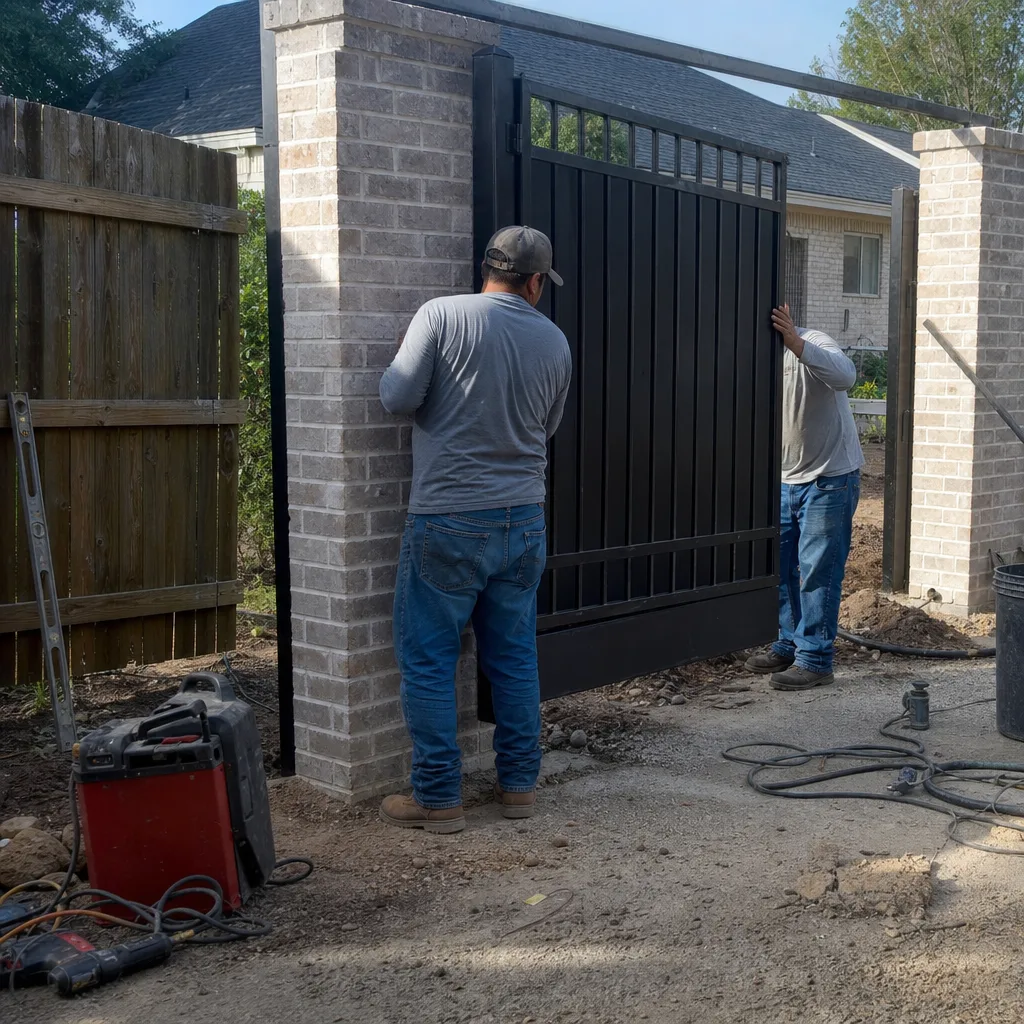
Carrollton sits on expansive clay soil, the kind that swells when wet and shrinks when dry. That movement telegraphs straight into your gate posts. A gate that swings and latches cleanly in April, after spring rains have swelled the soil, can sag and drag by August when the ground has dried and contracted. The post that carries the gate’s weight shifts, and suddenly everything downstream is wrong: the latch doesn’t align, the gate scrapes the grade, the operator’s limit switches sit at the wrong spot, and the motor works harder on every cycle.
The measurement that matters is post gap: the distance between the gate’s free-swinging end and the latch post. A new, properly hung gate in Carrollton will show roughly 1/4 to 1/2 inch of gap at the latch. As clay soil shifts the post through wet and dry seasons, that gap can open or close by 1/4 inch or more. If the gap changes by more than 1/2 inch from your seasonal baseline, the post has moved enough to matter, and you’re watching the early stages of a sag. Not yet a failure. But on the way.
How to measure post gap meaningfully:
- Pick a measurement point that’s easy to replicate: the latch tip, the top of the gate’s free edge, and the ground clearance at the hinge post.
- Record all three measurements on a fixed schedule, in the same notebook or file you keep for seasonal maintenance.
- Take measurements in April (wet soil baseline) and August (dry soil baseline). Also take one after any week of heavy rain that saturates the ground.
- If any measurement drifts more than 1/2 inch between readings, you have real post movement. Call a gate technician before the gate starts dragging or the latch fails.
Most post movement in Carrollton is reversible with re-shimming or re-setting the post in compacted base, not with a full replacement. But it only stays reversible if you catch it before the gate’s weight has bent the hinge leaf or ovalled the hinge holes. That’s the argument for measuring on a schedule instead of eyeballing the gate now and then.
Post-Storm Inspection Protocol for Carrollton
North Texas storms arrive fast, drop hard, and leave damage that is not always visible from a car window. We recommend a 10-minute post-storm walkthrough after any storm that brings 50+ mph gusts, hail, or enough rain to flood the street. That covers most of what Carrollton gets in a typical storm season, which runs March through May and again briefly in October.
The post-storm inspection, in order:
- Check the gate leaf for impact damage from blown debris. Dents and bends in the gate surface rarely stop the gate from working, but they compromise the powder coat and start corrosion.
- Run the gate one full cycle and listen for changes: new scraping sounds, a heavier motor, a gate that stops mid-cycle. Any of those is a storm-related mechanical issue.
- Check both photo-eyes for alignment. High wind vibrates the brackets, and a photo-eye that moved two inches out of the beam is now the reason your gate reverses for no reason.
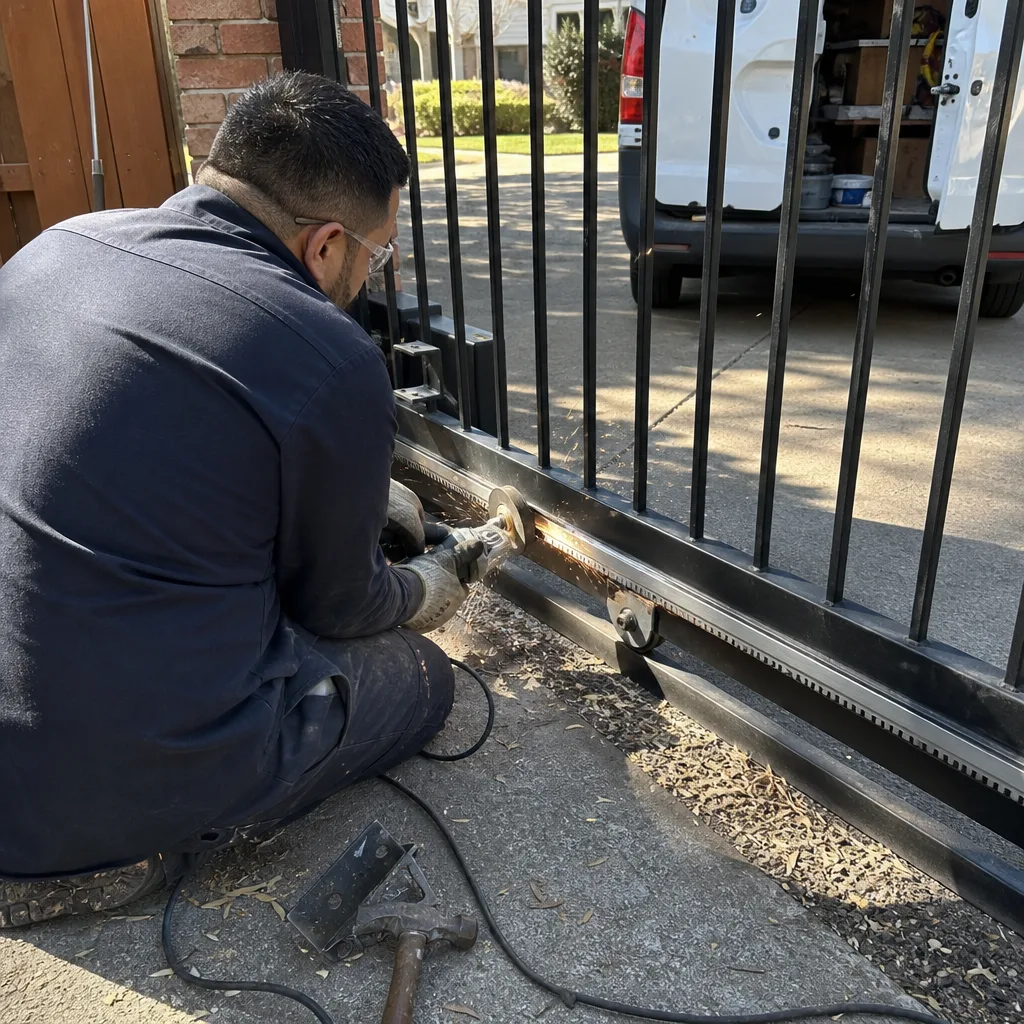
- Look for debris in the gate track if you have a sliding gate. Carrollton storms deposit leaves, gravel, and tree bark in the track, and that debris builds resistance against the motor.
- Check the gate’s grounding. Lightning strikes nearby can travel through the ground rod into the operator, and a ground fault after a storm usually shows up as a tripped GFCI or a dead board.
- Photograph everything you adjusted, straightened, or cleaned.
Hail is its own problem. Hail dents the gate finish and creates dozens of small impact craters that collect water, and water sitting in a dent becomes a pinhole rust site by the end of the summer. Touch-up paint or clear coat after a hail storm is cheap insurance. If hail damaged the operator housing itself, inspect the housing for cracks that would let rain into the control board. Even a hairline crack in the wrong spot spells a shorted board after the next rainfall.
Building a Seasonal Log That Any Technician Can Read
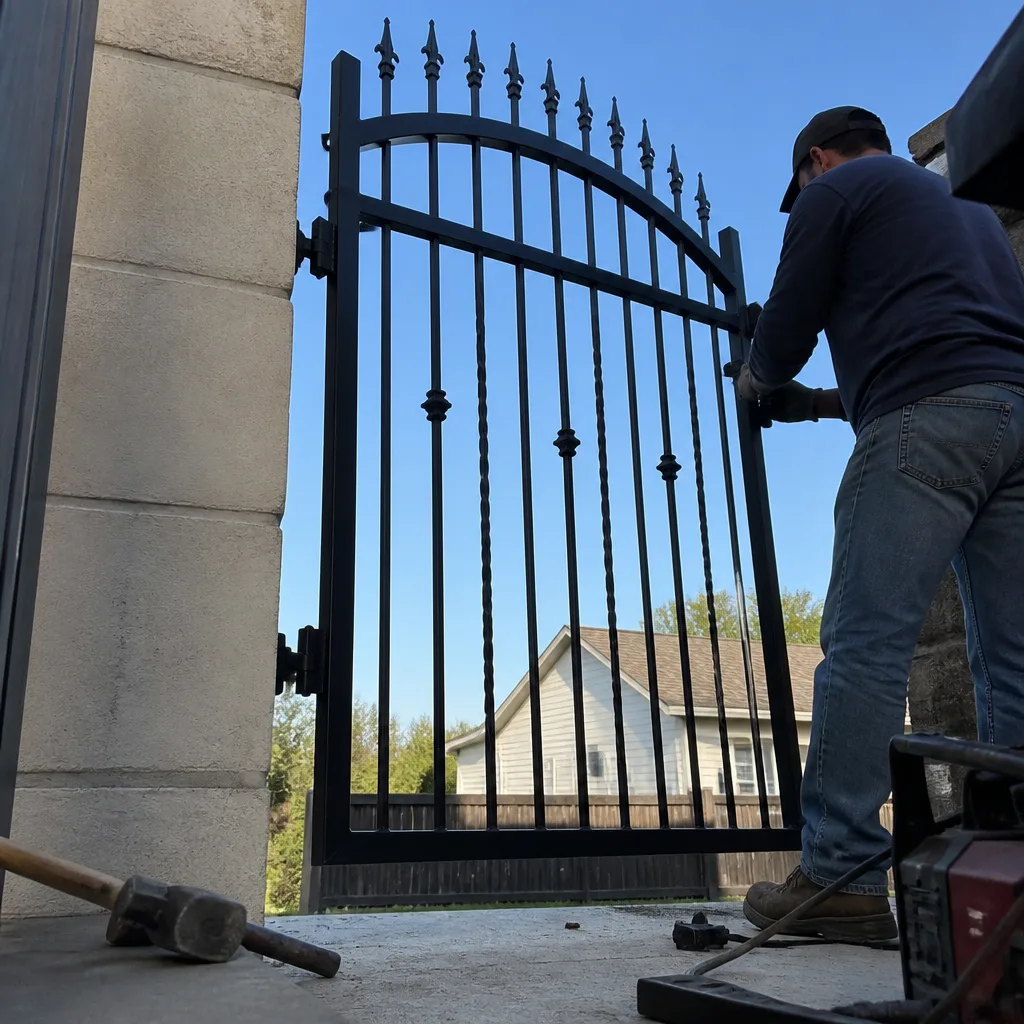
The single most valuable thing a homeowner can do for the long-term health of a gate system costs nothing at all. It’s a written log. Not a spreadsheet with 14 tabs. A simple running record of what was measured, what was adjusted, what was replaced, and when. Here’s why it matters: when a gate fails, the technician who arrives is looking at a machine with no memory. The gate doesn’t keep a service history. Unless you do, every new technician starts from zero, re-diagnoses the same problems, and spends billable time rediscovering what a previous technician already found.
A useful seasonal log contains:
- Date, weather conditions, and outside temperature at time of inspection.
- Post gap measurements at the latch, top edge, and hinge point.
- Limit-switch positions if you know how to read them, or a simple note: “gate fully closes, slight pause before reverse.”
- Lubrication applied and where.
- Any adjustments made and why.
- Photos: board condition, post bases, conduit runs, gate finish.
Keep the log in the garage near the gate disconnect. A future buyer will read that log and understand the gate’s history the way they’d understand a car’s service records. A future technician will read it cold and know what’s been done, which means less diagnostic time, fewer redundant repairs, and a smaller invoice. That’s the documentation habit that Adrian Vance started with commercial access-control work in 2014, and we apply the same standard to every residential gate we service: a written record of what was found, what was set, and what was left behind. Homeowners in Carrollton can schedule a seasonal inspection with us and receive that documentation as part of the visit.
The 15-Minute Monthly Walkthrough
Between the April and November deep inspections, a 15-minute monthly walkthrough catches most problems while they’re still cheap to fix. This is the routine we recommend for every Carrollton homeowner, whether they do the work themselves or call us for gate repair.
The monthly walkthrough, in under 15 minutes:
- Run the gate one full cycle and stand where you can see the wheels, hinges, and operator. Watch for jerky movement, listen for changes in motor sound, and confirm the gate fully opens and fully closes.
- Check the photo-eye alignment: block the beam with your hand while the gate is closing. It should reverse within one second. If not, the sensors need attention.
- Look at the gate’s ground clearance at the latch post. A visible change from last month means the post is moving.
- Check the operator housing for standing water inside or condensation on the cover. Condensation means the housing isn’t venting properly.
- Clear debris from the gate path and track. Grass clippings, leaves, and soil from recent rain all add mechanical resistance.
- Photograph anything that looked or sounded off, even if you don’t fix it. That photo becomes the next entry in your seasonal log.
That’s the entire routine. Most months it takes less than 15 minutes. The months where it takes longer are the months where you found something early, which is exactly the point.
Common Mistakes to Avoid
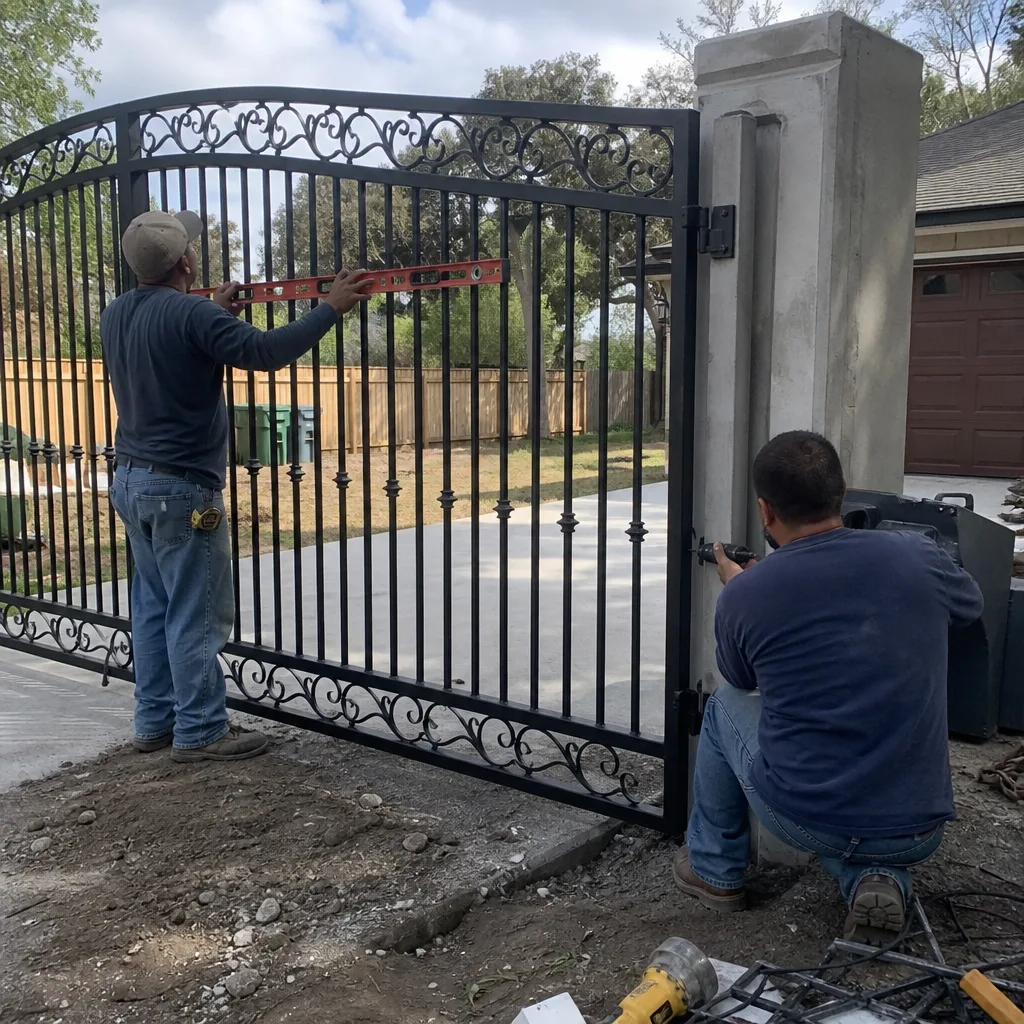
- Lubricating with WD-40. WD-40 is a water displacer, not a load-bearing lubricant. On gate hinges and operator arms, it strips the heavier grease that the joint actually needs, and within weeks the gate is running dry. Use white lithium or silicone grease instead.
- Waiting until the gate fails to look at it. By the time a Carrollton gate stops opening entirely, the failure usually started months earlier, as a post shifting, a capacitor degrading, or a seal hardening. The seasonal inspections exist so you find those early signs before they become failures.
- Ignoring photo-eye drift. A misaligned photo-eye usually doesn’t stop the gate. It makes the gate reverse randomly, or it makes the gate ignore the sensor entirely. Both are worse than a gate that simply won’t close, because both create a false sense that the safety system is working.
- Painting over rust without treating it first. Rust is active corrosion, not a cosmetic blemish. Paint over active rust traps moisture against the metal and accelerates the damage. Treat the rust, then paint.
- Setting the force sensitivity too high to compensate for a dragging gate. When a gate starts dragging, some homeowners crank up the force setting so the motor powers through. That works until it doesn’t, and when it doesn’t, the gate is breaking whatever is in its path instead of stopping. The right fix is addressing the drag, not overriding the safety.
- Assuming the battery backup is fine because the gate worked during the last power outage. A battery that can open the gate once during a short outage may not hold enough charge for a multi-day freeze event. Test the backup under load, and replace it every three years in Carrollton’s heat.
When to Call a Professional
Some seasonal maintenance is safely done by a homeowner: the monthly walkthrough, lubrication, photo-eye checks, log keeping. But there are points where professional help is the cheaper option in the long run. Call a gate technician when post gap measurements drift more than 1/2 inch, when the control board shows swollen capacitors or burn marks, when the gate reverses randomly for no apparent reason, when a previous repair involves garage-tension-level forces on a large steel gate, or when you find cracked conduit after a freeze. These are the problems where a wrong guess costs more than the service call would have. Vance Gate Repair Carrollton offers free estimates in Carrollton. Call (817) 778-4585 and we’ll walk the gate with you, put the written price in your hand before any work starts, and leave a documented photo record of whatever we find. For homeowners weighing a full replacement rather than another repair, our Gate Installation page explains how we handle new builds, and under Clause 1 of the Haven Standard, the price is always in writing before work begins.
Frequently Asked Questions
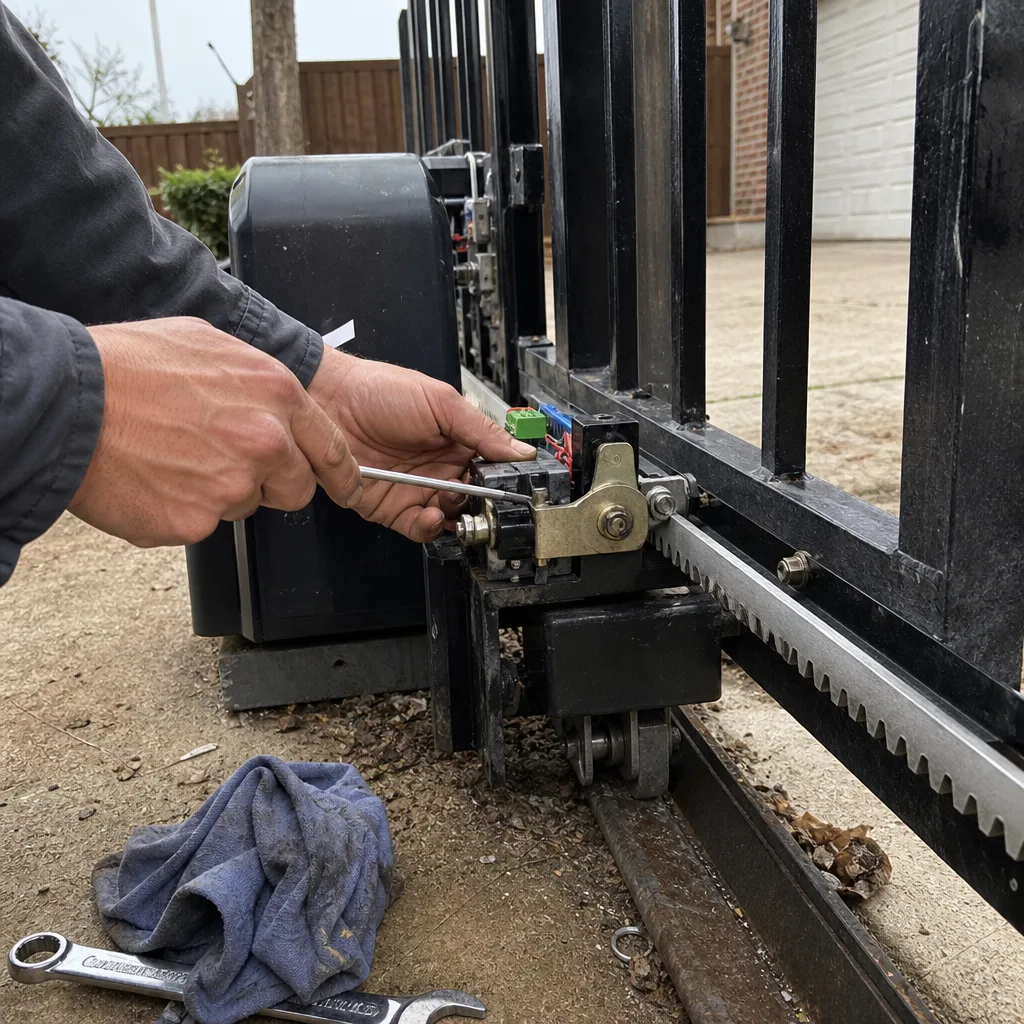
A homeowner doing their own seasonal lubrication, gap measurement, and sensor checks spends roughly $50 to $150 a year on grease, conduit tape, touch-up paint, and sealant. A professional seasonal inspection and tune-up in Carrollton typically runs $150 to $350 per visit depending on the gate type and operator brand, and that price includes the documented record of what was found and adjusted. Call (817) 778-4585 for an exact written quote before any work starts.
Yes. Vance Gate Repair works on Linear, Viking, Ghost Controls, DoorKing, and five other major gate-automation brands, which means we service whatever motor is already on the property rather than steering you toward a replacement. We carry parts for the most common board and sensor failures across those brands and can usually complete the professional gate repair in one visit.
Seal any cracked or gapped conduit before the first hard freeze, lubricate hinge and pivot points with cold-rated grease, confirm photo-eye alignment, and run a force test so the gate reverses under light pressure. The November freeze-prep checklist earlier in this guide covers each step in order, and it’s designed for Carrollton’s specific freeze pattern: moisture intrusion followed by a fast temperature drop.
Yes, measurably. Expansive clay swells in wet spring weather and contracts in dry summer heat, and the post that carries your gate moves with it. The result is a gate that latches cleanly in April and drags by August. Tracking your post gap measurements seasonally tells you when that movement is within normal range and when it’s time to call a professional before the gate starts causing real damage.
Run the gate one full cycle and listen for new sounds, check both photo-eyes for misalignment from wind vibration, clear debris from the gate track, inspect the operator housing for impact or hail damage, and photograph anything you adjust. A ten-minute post-storm walkthrough after any major Carrollton storm catches most wind and water damage while it’s still minor.
A seasonal log gives any future technician a cold read on the gate’s history, which means less diagnostic time and no paying twice to rediscover the same problem. It also helps if you sell the home: a buyer who sees a maintained gate with a documented service history treats it as an asset, not a liability. The log format described earlier in this guide takes five minutes per entry and pays for itself the first time a technician doesn’t have to start from zero.
The Bottom Line
Carrollton’s climate punishes gate systems in two predictable ways: summer heat degrades electronics and thins lubricants, and winter freezes exploit any moisture that found its way into the system. The fix is not complicated. It’s a pre-summer check in April, a freeze-prep pass in November, a ten-minute post-storm walkthrough after severe weather, and a monthly fifteen-minute visual routine in between. Track your post gap numbers, keep a simple log, and check our more guides & resources or call a professional when the measurements tell you to. The homeowners who follow a seasonal schedule in Carrollton aren’t the ones paying emergency rates in February. They’re the ones whose gates just keep working.
Written by Adrian Vance, Owner at Vance Gate Repair Carrollton, serving Carrollton since 2014.